

Salesforce is bringing CRM beyond its traditional interface, allowing businesses to work with customer data directly in Claude, Slack, and their own internal applications.
This is the direction behind AIforce, Salesforce’s approach to connecting customer data, AI, and business processes with the tools employees already use every day.
On October 9, 2026, Salesforce CEO Marc Benioff announced that AIforce was being renamed SIforce, a name associated with the term Super Intelligence. However, Salesforce has not confirmed whether the rebranding will involve any changes to the underlying technology or features.
So how does AIforce work, and what can businesses actually do with it?
1. Salesforce AIforce Renamed SIforce: What’s New?
According to Salesforce Ben, Marc Benioff announced the name change from AIforce to SIforce on X on October 9, 2026. Salesforce Ben reported the news on October 12, 2026.
Salesforce had previously introduced this integration approach under the name Headless 360, before rebranding it as AIforce at Dreamforce 2026.
The name SIforce refers to the concept of Super Intelligence, but that does not mean Salesforce has developed an AI system with intelligence beyond human capabilities.
As of October 15, 2026, Salesforce’s official website still uses the AIforce name. The company has also not announced any specific changes to the technology’s architecture or features following Benioff’s statement.
For businesses, the more relevant development is how Salesforce is extending CRM capabilities into the tools employees already use, rather than keeping them within a traditional CRM interface.

2. What Is AIforce? Bringing Salesforce Into the Tools You Already Use
In their daily work, sales teams often need to open Salesforce to check customer information, update opportunities, or review their pipeline. When they need to collaborate with colleagues or analyze data using AI, they switch to other applications.
AIforce enables users to work with Salesforce data and capabilities directly in tools such as Claude, Slack, or custom-built business applications.
For example, a sales representative can use Claude to access account information from Salesforce, while other team members can review relevant data and discuss an opportunity together in Slack.
AIforce is not a new CRM system designed to replace an organization’s existing Salesforce environment. Customer data, business logic, and workflows remain connected to the Salesforce platform.
What changes is how employees interact with that information. Instead of opening Salesforce for every task, they can access data and perform supported actions directly within the application they are already using.
3. Four Core AIforce Experiences
Salesforce has introduced four AIforce experiences designed to support different business needs, from sales and collaboration to application development.
Claudeforce: Work With Salesforce Directly in Claude
Claudeforce connects Salesforce with Claude through a preconfigured Salesforce MCP Server and 37 ready-to-use sales skills.
These skills support a range of sales activities, including prospecting, accessing account information, and maintaining pipeline data quality.
Sales teams can use Claude to analyze customer context and perform supported Salesforce actions without constantly switching between the two platforms.
Slackforce: Bringing Salesforce Data Into Team Collaboration
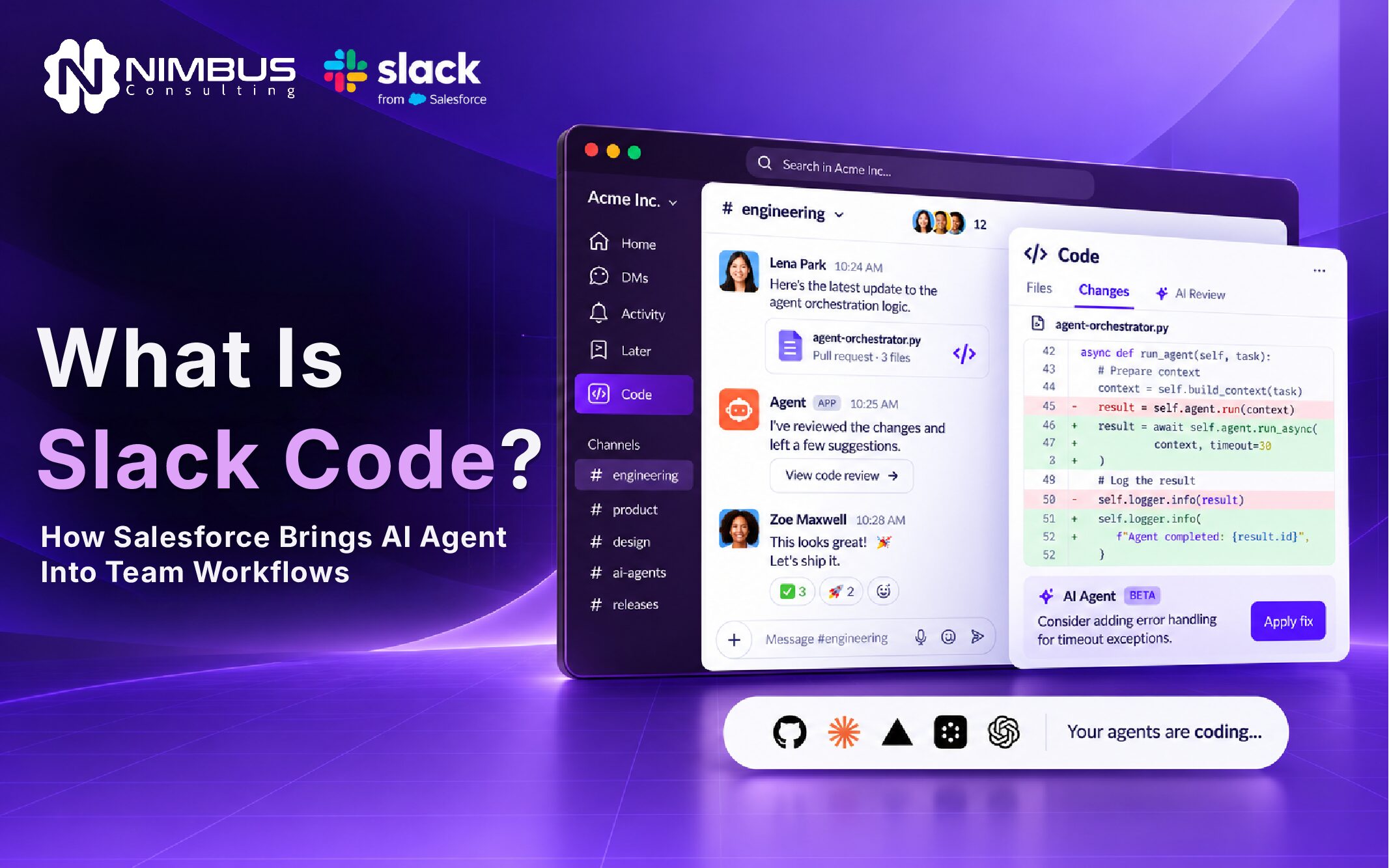
Slackforce brings Salesforce data and capabilities into Slack, where employees can discuss and manage work with their colleagues.
Through interactive interfaces called Slackforce Surfaces, team members can view, filter, discuss, and interact with relevant information in real time.
Instead of simply sharing a link to a CRM record, teams can work directly with Salesforce data within their conversations.
Agentforce Coworker: An AI Assistant Inside Salesforce
Agentforce Coworker operates directly within Salesforce, using account data, interaction history, and business activity to assist users.
It can analyze information, surface insights, and take permitted actions based on the organization’s existing access permissions and business rules.
Employees can receive AI assistance while working in Salesforce without opening a separate application.
Headless Toolkit: Integrating Salesforce Into Custom Applications
Headless Toolkit provides developers with tools including Salesforce MCP, APIs, plug-ins, skills, and other development resources.
Businesses can use these tools to connect Salesforce with AI assistants, internal applications, or custom interfaces designed around their specific workflows.
For example, a company could develop an AI assistant for customer service that brings together order information and related Salesforce actions within a single application.
This allows businesses to extend their existing CRM capabilities into new applications without rebuilding their entire Salesforce environment.
4. One Salesforce Foundation, Multiple Ways to Work
Whether employees use AIforce through Claude, Slack, or a custom application, each experience connects to the core capabilities of Salesforce.
Salesforce identifies four key components:
- Data & Context: Bringing relevant customer data and business context into each task.
- Actions & Workflows: Connecting to the business logic and workflows already configured in Salesforce.
- Identity & Permissions: Maintaining user identity, access permissions, and authorization controls.
- Trust & Governance: Extending Salesforce’s security and data governance capabilities into connected experiences.
This is also what distinguishes AIforce from simply adding a chatbot to a CRM system.
When connected to Salesforce, AI can use relevant business data, access authorized capabilities, and support tasks within existing workflows.
However, businesses still need to configure permissions, control data access, and establish appropriate approval processes. Using Salesforce as a common foundation does not automatically guarantee that every AI-generated action will be safe or accurate.
5. How Can Businesses Make Use of AIforce?
Reduce Switching Between Applications
One common challenge with CRM systems is that customer information lives in Salesforce, while much of the discussion and collaboration happens in other tools.
For example, when reviewing a sales opportunity, a sales representative may need to open Salesforce to check its status, return to Slack to discuss it with colleagues, and then go back to the CRM to update the record.
With Slackforce, teams can access Salesforce data and coordinate their work directly within Slack.
This can reduce unnecessary switching between applications, particularly when tasks involve collaboration across multiple departments.
Connect AI With Sales Workflows
AI can help teams summarize information and generate recommendations more quickly. But without a connection to CRM, employees still need to retrieve data manually or complete follow-up actions themselves.
With Claudeforce, sales teams can use AI to access customer information, review pipeline opportunities, and prepare for sales activities.
Depending on the available features and configured permissions, AI can also assist with relevant actions in Salesforce.
The value goes beyond how quickly AI generates a response. It lies in the ability to use CRM information to support real business tasks.
Get More Value From Existing CRM Data
Businesses have often invested significant resources in building customer databases, standardizing processes, and implementing Salesforce.
AIforce makes it possible to use these existing resources across a wider range of applications.
Sales teams can work with Salesforce in Claude, cross-functional teams can collaborate through Slack, and developers can create custom tools using Headless Toolkit.
However, making Salesforce available in more applications does not automatically improve business performance. The value depends on CRM data quality and how business processes are organized.
If customer information is inconsistent, pipeline records are outdated, or access permissions are unclear, introducing AI may make existing problems harder to manage.
Before implementation, businesses should:
- Review CRM data quality and how Salesforce is currently being used.
- Identify workflows that involve excessive manual work or frequent switching between applications.
- Standardize workflows and establish appropriate access permissions before connecting AI.
- Start with specific use cases where outcomes can be measured before expanding further.
Not every process needs AI. The priority is identifying where connecting Salesforce data, AI, and business capabilities can make a meaningful difference to day-to-day work.
Conclusion
Salesforce’s announcement that AIforce is being renamed SIforce has attracted attention, but the company has yet to confirm any accompanying technology changes.
What matters more is the technology behind AIforce: Salesforce is bringing CRM data and business capabilities into the tools employees use every day, rather than requiring all work to take place within the Salesforce interface.
For businesses, this creates more ways to use their existing CRM investments, connect AI with sales workflows, and improve collaboration across teams.
However, successful implementation depends on more than the tools being connected. Data quality, well-defined processes, and effective access management remain essential.
Nimbus Consulting helps businesses implement and optimize Salesforce while identifying practical AI opportunities aligned with their operational needs, enabling them to get more value from their existing CRM systems.
Talk to Nimbus — Make Salesforce work smarter for your business.
Phone: (+84) 812 014 918
Email: info@nimbus-consult.vn
Ho Chi Minh City Office: 68 Bat Ban Street, Binh Trung Ward, Ho Chi Minh City, Vietnam
Hanoi Office: 12th Floor, Vinafor Building, 127 Lo Duc Street, Hai Ba Trung Ward, Hanoi, Vietnam

 Ho Chi Minh City Office: 68 Bat Ban, Binh Trung Ward, Ho Chi Minh City