

As businesses in Vietnam expand their operations and serve increasingly demanding customers, managing customer relationships across multiple systems becomes more challenging. Sales teams need better visibility into their pipelines, customer service teams require consistent customer information, and management needs reliable data to make informed decisions.
This is where Salesforce can make a difference. However, adopting a CRM platform involves more than purchasing software. Businesses need to understand their requirements, design the right solution, integrate existing systems, and ensure that employees can use the platform effectively.
Working with a Salesforce Partner in Vietnam can help organizations navigate this process with local expertise and a solution aligned with their business objectives.
1. What Is a Salesforce Partner?

A Salesforce Partner is an organization that works within the Salesforce ecosystem to provide services such as consulting, implementation, integration, customization, and ongoing support.
Rather than simply introducing software features, a partner helps businesses determine how Salesforce can address their operational challenges.
Depending on the organization’s needs, a Salesforce Partner may support activities such as:
- Business consulting: Understanding business processes, identifying operational gaps, and defining CRM requirements.
- Solution design: Selecting suitable Salesforce products and designing workflows that support business operations.
- Implementation: Configuring Salesforce, developing required functionalities, and preparing the system for deployment.
- System integration: Connecting Salesforce with ERP, marketing platforms, communication tools, and other business applications.
- Training and adoption support: Helping employees understand and use the platform in their daily work.
- Ongoing optimization: Reviewing system performance and improving workflows as business requirements evolve.
A capable partner connects technology decisions with measurable business outcomes.
2. Why Work with a Salesforce Partner Vietnam?
Choosing a Salesforce Partner with experience in the Vietnamese market can bring several practical advantages.
Understanding Local Business Operations
Businesses in Vietnam may have specific requirements related to sales processes, customer engagement, internal approvals, reporting structures, and existing technology environments.
A local implementation partner can work closely with stakeholders to understand these requirements and translate them into a suitable Salesforce solution.
This helps reduce the gap between how a business operates and how its CRM system is configured.
More Effective Communication and Collaboration
CRM implementation usually involves multiple departments, including sales, marketing, customer service, IT, and management.
Working with a team that understands the local business environment can make workshops, requirement discussions, and project coordination more efficient.
Clear communication also helps stakeholders identify potential issues earlier and make decisions throughout the implementation process.
Integration with Existing Systems
Many organizations already use different applications to manage accounting, enterprise resource planning, customer data, marketing activities, and internal communication.
A Salesforce implementation should consider how these systems work together rather than creating another isolated platform.
An experienced partner can assess integration requirements and design a connected technology environment that supports more consistent data management.
Support Throughout the Implementation Journey
Implementing CRM is not a one-time technical activity. Businesses need to prepare their teams, manage changes, monitor adoption, and continuously improve the system.
A Salesforce Partner can provide support across these stages, helping organizations move from initial planning to practical, long-term use.
3. What Services Can a Salesforce Partner Provide?
The scope of services depends on each organization’s objectives, existing systems, and digital maturity. Common service areas include the following.
Salesforce Consulting
Before implementing a solution, businesses need a clear understanding of their current processes and future requirements.
Salesforce consulting typically includes:
- Business process assessment.
- CRM requirement analysis.
- Solution architecture and roadmap planning.
- Salesforce product recommendations.
- Implementation scope and project planning.
This stage helps organizations avoid investing in features that do not address their actual business needs.
Salesforce Implementation
Implementation turns the solution design into a working business system.
Typical activities include:
- Salesforce environment configuration.
- Custom objects, fields, and page layouts.
- Workflow and automation setup.
- User roles and access permissions.
- Data migration and validation.
- Testing and deployment.
The objective is to build a system that supports real business processes while remaining manageable as the organization grows.
Salesforce Integration
Businesses often need Salesforce to exchange information with other platforms.
Integration services can connect Salesforce with ERP systems, websites, marketing automation platforms, communication tools, and external data sources.
With an appropriate integration architecture, organizations can reduce manual data entry, minimize information silos, and improve the consistency of business operations.
Business Process Optimization
A CRM platform should help organizations work more efficiently, not simply digitize existing manual processes.
A Salesforce Partner can review workflows and identify opportunities to improve sales activities, customer service processes, internal coordination, and management reporting.
Read more: 5 Key Criteria for Choosing the Right Salesforce Partner for Your Business
4. Salesforce Solutions for Different Business Needs
Salesforce offers multiple products that support different parts of the customer journey. A partner can help businesses identify which solutions are relevant to their operations.
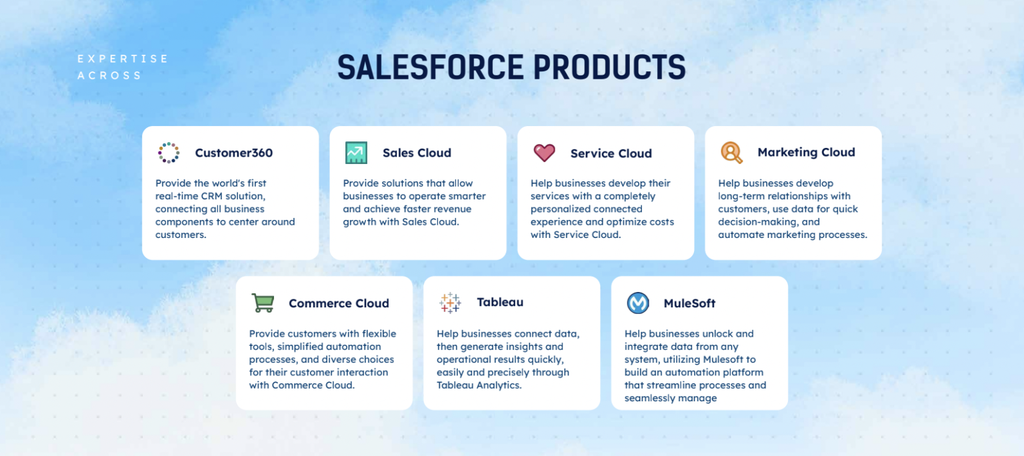
Sales Cloud: Improve Sales Management
Sales Cloud helps organizations manage leads, accounts, contacts, opportunities, and sales activities in one platform.
Businesses can use it to:
- Track leads and sales opportunities.
- Manage customer information.
- Monitor sales pipeline performance.
- Automate repetitive sales tasks.
- Improve forecasting and reporting.
This is particularly useful for organizations that want better visibility into sales performance and more consistent sales processes.
Service Cloud: Strengthen Customer Service
Service Cloud supports customer service operations by helping teams manage cases, customer inquiries, and service interactions.
It can help organizations centralize service information, streamline case management, and provide employees with a more complete view of customer history.
Marketing Cloud: Connect Marketing Activities
Salesforce Marketing Cloud solutions help businesses manage customer engagement across marketing channels.
Depending on the product and implementation scope, organizations can use these capabilities to support campaign automation, audience segmentation, and personalized customer communication.
Slack and Tableau: Connect Teams and Business Insights
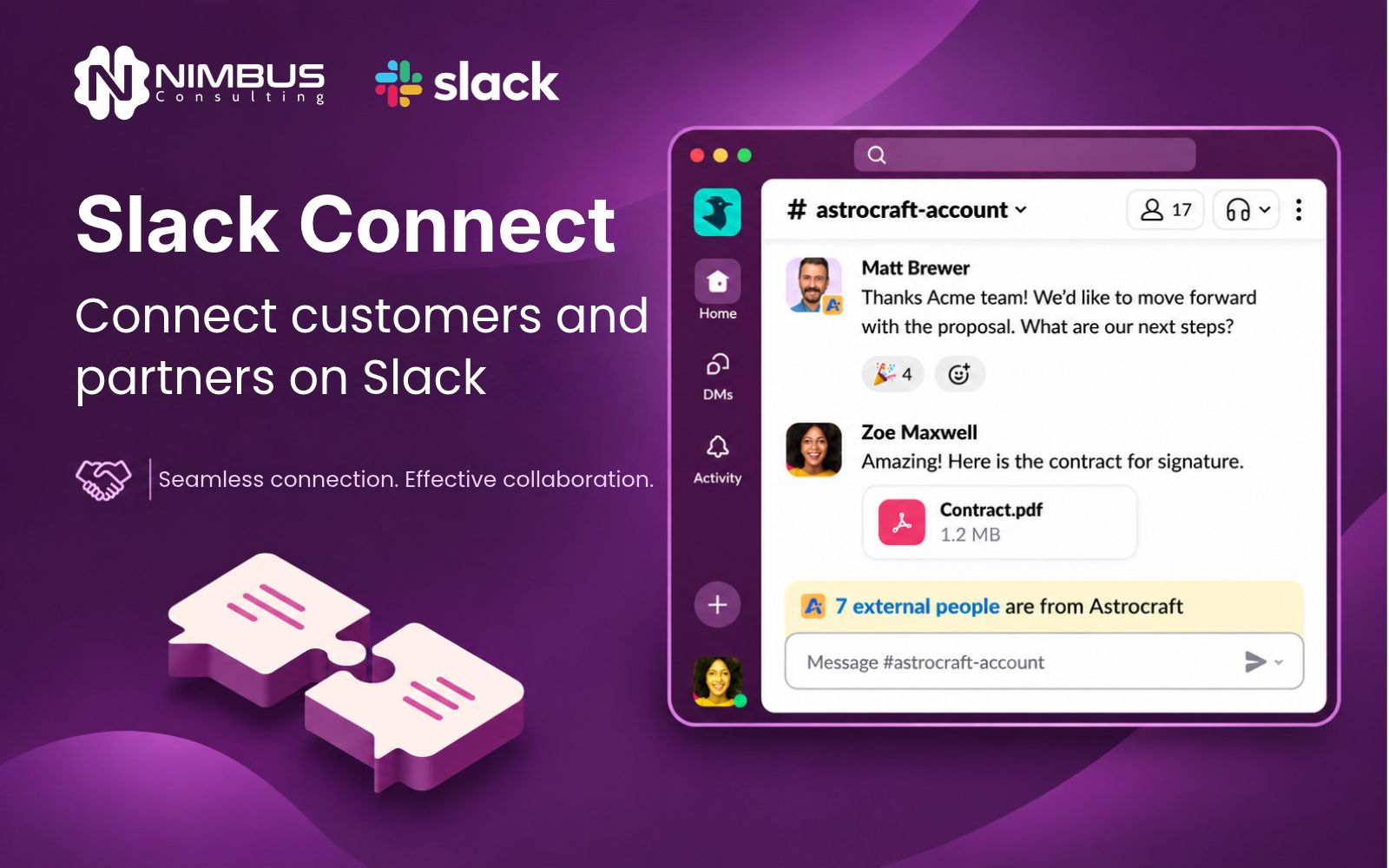
Slack supports collaboration by bringing conversations, applications, and workflows into a shared workspace.
Tableau helps organizations analyze data and turn information into actionable insights through dashboards and visual analytics.
Together with Salesforce, these platforms can support better coordination between teams and more informed business decisions.
Data 360 and Agentforce: Build Connected, AI-Enabled Experiences
Salesforce Data 360 helps organizations bring customer data together to support a more unified view of their customers.
Agentforce extends Salesforce capabilities with AI agents that can support business processes and customer interactions.
However, successful AI adoption depends on more than enabling AI features. Businesses need reliable data, clear workflows, appropriate access controls, and well-defined use cases.
A Salesforce Partner can help assess these foundations before introducing AI capabilities into business operations.
5. What Should Businesses Prepare Before Salesforce Implementation?
A successful CRM project begins before the technical implementation stage.
Organizations should consider several important areas.
Define business objectives. Identify what the organization wants to improve, such as lead management, sales productivity, customer service, or reporting.
Review existing processes. Document how teams currently work, where information is stored, and which activities require manual effort.
Assess data quality. Review customer records, duplicates, data formats, and migration requirements before moving information into Salesforce.
Identify key stakeholders. Involve representatives from relevant departments to ensure that the solution reflects actual business needs.
Plan for user adoption. Consider how employees will use the system, what support they need, and how adoption will be evaluated.
Establish a long-term roadmap. Avoid trying to implement every possible feature at once. Prioritize essential capabilities first and expand the system as business needs develop.
These preparations help create a more realistic implementation scope and reduce unnecessary complexity.
6. How to Evaluate a Salesforce Partner in Vietnam
Not every implementation partner will be the right fit for every organization. Before selecting a partner, businesses should evaluate several factors.
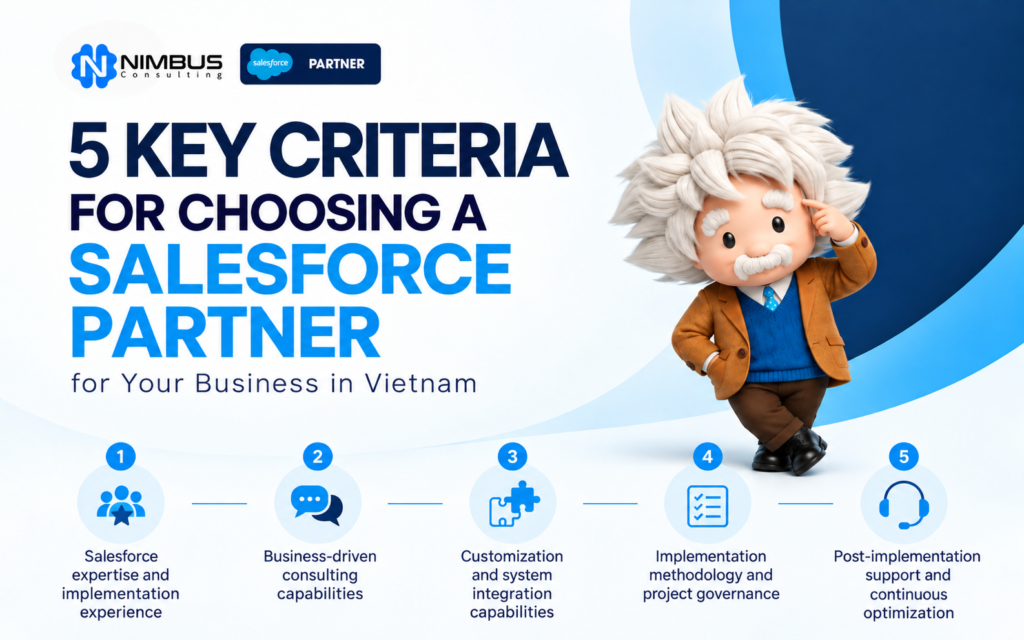
Salesforce Expertise and Certifications
Review the team’s Salesforce experience, relevant certifications, and familiarity with the products required for the project.
Certifications can indicate product knowledge, while practical experience helps demonstrate the ability to apply that knowledge in real business environments.
Consulting and Technical Capabilities
A partner should be able to understand business requirements as well as technical considerations.
Look for a team that can support the full project lifecycle, from business analysis and solution design to implementation, integration, and optimization.
Understanding of Your Industry
Different industries have different operational requirements. A partner familiar with your business environment may be better positioned to identify relevant workflows and potential implementation challenges.
Clear Project Methodology
Ask how the partner manages project scope, timelines, testing, data migration, communication, and deployment.
A transparent project approach helps stakeholders understand responsibilities and track progress.
Long-Term Support
Consider what happens after the system goes live. Businesses may need additional integrations, new automation, process improvements, or support as their operations expand.
The right partner should be able to support the organization’s development beyond the initial implementation.
7. Nimbus Consulting: Your Salesforce Partner in Vietnam
For businesses looking for a Salesforce Partner in Vietnam, Nimbus Consulting provides consulting and implementation services to help organizations improve their business operations through connected technology solutions.
As an official Salesforce Partner in Vietnam, Nimbus supports businesses in identifying suitable Salesforce solutions and aligning technology with their operational objectives.
Nimbus’s services include:
- Software Consulting: Assessing business requirements and recommending suitable technology solutions.
- System Implementation: Configuring and implementing platforms to support business processes.
- Platform Integration: Connecting Salesforce with other business applications to improve data flow and collaboration.
- Business Process Optimization: Improving workflows and reducing repetitive manual activities through technology.
With a team holding more than 20 Salesforce certifications, Nimbus brings together business consulting and technical capabilities to support organizations throughout their Salesforce journey.
Whether a business is considering its first CRM implementation or looking to improve an existing Salesforce environment, Nimbus focuses on building solutions that can adapt to changing business requirements.
Learn more about Nimbus Consulting – Salesforce Partner in Vietnam or explore Nimbus’s consulting and implementation services.
8. Conclusion: Building Long-Term Value with the Right Salesforce Partner
Salesforce can help businesses improve customer management, streamline operations, connect data, and create more consistent customer experiences. However, the value of the platform depends on how well it is aligned with business processes and organizational goals.
Choosing the right Salesforce Partner in Vietnam can make this journey more structured, from initial consulting and solution design to implementation, integration, and continuous optimization.
For organizations planning to adopt or expand Salesforce, the next step is to evaluate current business challenges and identify the capabilities that will create the greatest impact.
With the right strategy and implementation partner, Salesforce can become more than a CRM platform. It can serve as a foundation for connected operations and sustainable business growth.

 Ho Chi Minh City Office: 68 Bat Ban, Binh Trung Ward, Ho Chi Minh City