Are you considering bringing Salesforce Commerce Cloud (SFCC) to your business in Vietnam? According to Mordor Intelligence, with the e-commerce market expected to reach USD 33.57 billion by 2026, growing at a compound annual growth rate (CAGR) of 21.08%, now is the time to optimize omnichannel sales and stay ahead of the competition. As an Authorized Salesforce Partner in Vietnam, Nimbus Consulting is here to support your journey. With 12+ experts, more than 20 certifications, and over 10 successful projects, we help you spread value like “Nimbus Waves”: from a single strategic touchpoint, value radiates across the organization, improving operations, empowering teams, and maximizing profitability.
If you are not yet familiar with what SFCC really is and the specific benefits it offers Vietnamese businesses, read our related article first: 7 Commerce Challenges and How Salesforce Commerce Cloud Solves Them. Then come back here to explore the practical implementation process in greater detail.
According to Salesforce data, businesses using SFCC often experience online sales growth up to five times the industry average (especially during peak periods such as Cyber Week), while Agentforce is driving annual recurring revenue (ARR) growth of 169% year-over-year. In Vietnam, where more than 70% of traffic comes from mobile devices, SFCC helps businesses compete more effectively with global brands.
So, how can you turn these impressive numbers into reality for your own business?
Join Nimbus Consulting as we explore a complete end-to-end Salesforce Commerce Cloud implementation guide for Vietnam—from initial assessment and planning to development, testing, go-live, and long-term optimization. We will share practical experience from successful projects, helping you avoid common pitfalls and maximize the power of SFCC to drive sustainable e-commerce revenue growth.
1. What Types of Businesses in Vietnam Are Suitable for Salesforce Commerce Cloud?
Salesforce Commerce Cloud is a leading cloud-based e-commerce platform that flexibly supports B2B, B2C, and D2C business models, with Einstein AI and Agentforce integration for personalized customer experiences. It is best suited for businesses generating approximately USD 1 million or more in annual e-commerce revenue, especially those requiring omnichannel management, deep ERP/CRM integration, or international expansion.
Business Model Classification
B2C Commerce: Ideal for retail, fashion, and consumer goods businesses, focusing on personalization and mobile-first experiences (using JavaScript-based stacks, SFRA, or Composable Storefront for fast mobile performance).
B2B Commerce: Perfect for distribution, manufacturing, and logistics businesses, featuring self-service portals and contract-based pricing management (native to Salesforce using Lightning Web Components and Apex).
D2C: Designed for brands that want to sell directly to end consumers while leveraging highly personalized marketing capabilities.
At Nimbus Consulting, we have successfully supported businesses across multiple industries in Vietnam, including Logistics (such as Seahorse Shipping), Manufacturing, High-Tech/SaaS (such as Katalon), Real Estate, and Financial Services (such as Dragon Capital). We understand local requirements, from integrating VNPay, MoMo, and ZaloPay payment gateways to logistics providers such as GHTK, GHN, and J&T, as well as electronic invoicing compliance under Decree 123/2020.
2. Before Implementation: 5 Questions You Need to Answer
We have seen many projects lose direction not because of technology limitations, but because of inadequate preparation. Take the time to answer these five questions clearly with your team:
- What are your specific business goals? Increase conversion rates (2–4% for B2C, 5–8% for B2B)? Reduce order processing time? Expand into B2B markets?
- What systems do you currently use? Which ERP (SAP, MISA, Oracle)? CRM? Warehouse management software? Every integration point requires careful planning.
- What are your realistic budget and timeline expectations? On average, projects require 3–6 months to go live, with consulting and customization accounting for 40–60% of total costs.
- Who are the end users? Sales teams, B2B partners, or direct customers? This influences UX design and user adoption planning.
- Do you need B2C, B2B, or both? This decision significantly impacts architecture choices (flexible headless B2C versus deeply integrated native B2B).
Phase 1 — Assessment & Planning (Discovery)
Typical duration: 2–4 weeks.
This is the most important stage and what we call the “foundation for preventing scope creep.”
- Audit existing systems: Map data flows across ERP, CRM, and warehouse systems.
- Gather requirements: Interview stakeholders (sales, IT, executives) and categorize requirements into must-have versus nice-to-have.
- Analyze data quality: Review product, customer, and order data. Poor-quality data is often the biggest implementation obstacle.
- Define architecture: Headless/Composable for B2C? MuleSoft for complex integrations?
- Create a project charter: Clearly define scope, timeline, and KPIs for measuring success.
Below is a typical Salesforce Commerce Cloud implementation flowchart:
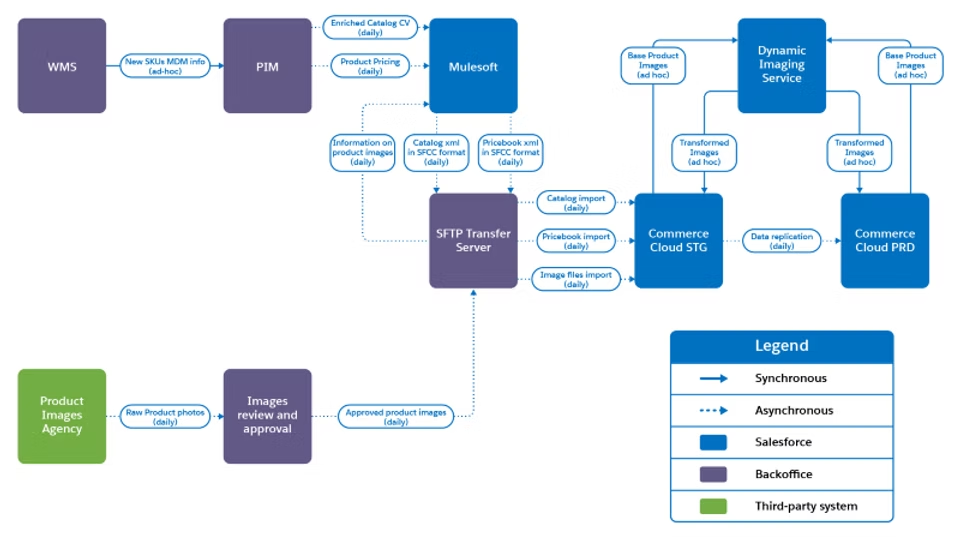
Source: trailhead.salesforce.com
Architectural Diagram & Data Flow Guide
Phase 2 — Solution Design
Duration: 3–5 weeks.
Transform business requirements into a detailed technical blueprint.
- Data Model: Product and order structures, especially account hierarchies for B2B.
- Storefront & UX: Composable Storefront (PWA Kit) helps optimize performance and Core Web Vitals when implemented according to best practices.
- Integration Architecture: API-first design using MuleSoft, integrating VNPay, MoMo, ZaloPay, and electronic invoicing systems compliant with Decree 123/2020.
Getting the design right from the beginning reduces maintenance costs and minimizes future rework.
Phase 3 — Build & Integration
Duration: 8–16 weeks.
This is the longest phase and requires close collaboration.
- Basic configuration: Catalogs, price books, inventory management, and setup of Business Manager (B2C) or Experience Cloud (B2B).
- Storefront development: Using React with PWA Kit to ensure responsiveness for Vietnam’s mobile-driven market, where over 70% of traffic comes from mobile devices.
- Integrations: ERP systems (MISA, SAP), logistics providers (GHTK, GHN, J&T with real-time webhooks), and payment gateways.
Nimbus Consulting follows a two-week agile sprint cycle with regular demonstrations, ensuring minimal disruption and maximum adoption in line with our Business-First mindset.
Example of an SFCC dashboard after implementation:
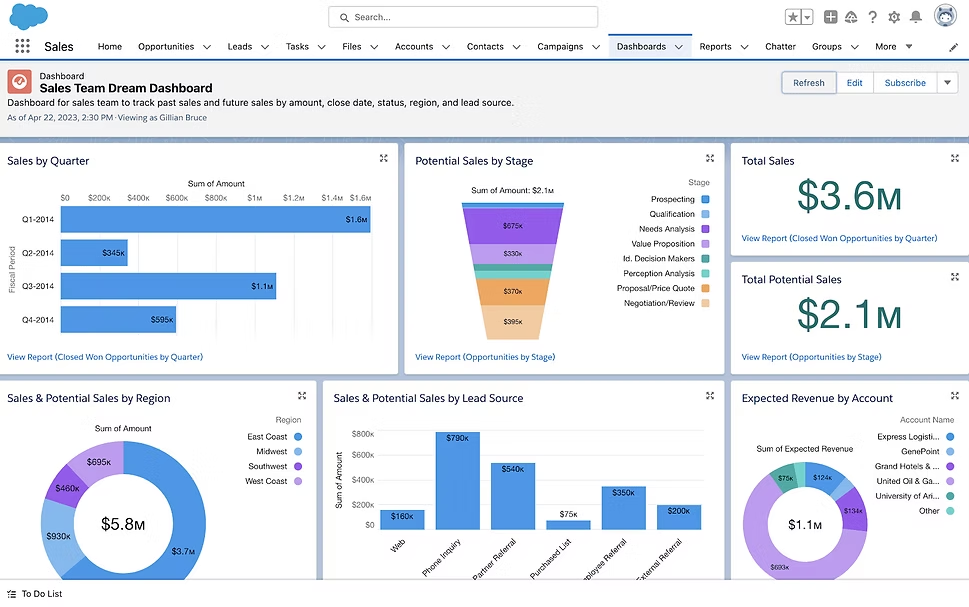
Source: admin.salesforce.com
Create a Dream Dashboard for Your Sales Team – Salesforce Admins
Phase 4 — Testing & Go-Live
Duration: 2–4 weeks.
- Functional and integration testing: Validate user journeys and data synchronization.
- Load and stress testing: Verify auto-scaling capabilities during peak traffic events such as Black Friday.
- UAT and security testing: Ensure PCI DSS compliance.
- Go-live checklist: DNS, SSL, rollback plans. We recommend launching on Tuesday or Wednesday to allow time for issue resolution.
Phase 5 — Operations & Post-Go-Live Optimization
Going live is only the beginning. The real value comes from continuous optimization.
KPI Monitoring
- Conversion Rate: 2–4% for B2C, 5–8% for B2B.
- Average Order Value (AOV): Increased through Einstein recommendations.
- Cart Abandonment Rate: Reduced through ongoing optimization.
Optimization with Agentforce 2026
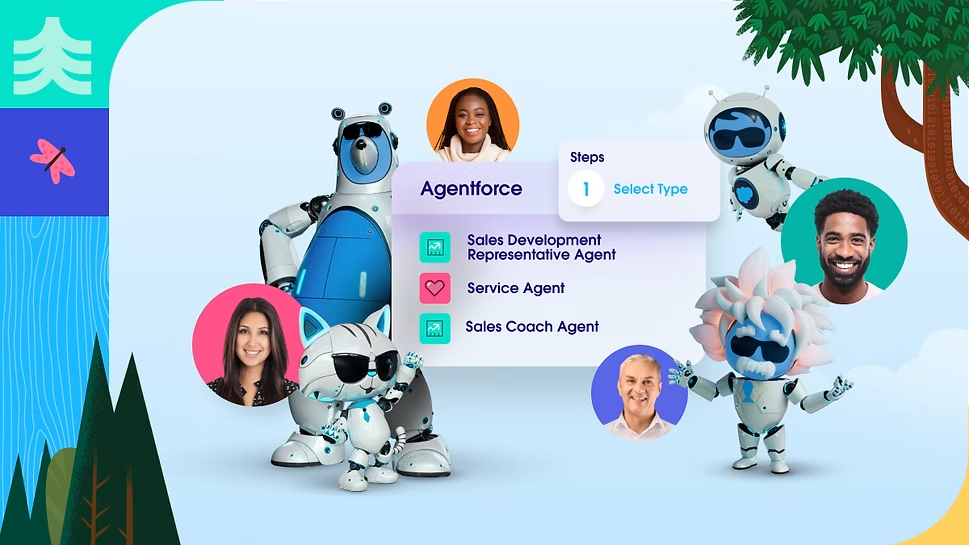
Merchant Agent automates merchandising activities, while Personal Shopper supports conversational shopping experiences through chat, helping drive significant revenue growth. Integrating Slack allows teams to receive order alerts and real-time reporting, creating seamless connectivity across the Salesforce ecosystem. See our related article: Slack Connects People, Shapes the Future of Business.
Illustration of Agentforce in Commerce Cloud:
Source: salesforce.com
Agentforce Partner Network: The World’s First Agent Ecosystem – Salesforce
3. Actual Implementation Costs in Vietnam (2026)
Based on Salesforce’s GMV-based pricing model:
- License: Commerce Cloud licensing is typically calculated as a percentage of GMV and depends on the edition, feature scope, and commercial agreement.
- Implementation Costs: Small projects: VND 150–300 million; medium projects: VND 300–700 million; large projects: over VND 700 million.
- Annual Operations: Approximately 15–20% of implementation costs.
- ROI: Digital sales growth can reach up to five times the industry average. We always provide transparent ROI calculations so clients can clearly see the value generated.
4. Why Work with an Authorized Salesforce Partner in Vietnam?
We have seen many self-implemented projects struggle due to a lack of specialized expertise. Working with a partner such as Nimbus Consulting provides:
- Deep understanding of the Vietnamese market, including local payment systems, logistics providers, and electronic invoicing requirements.
- A strong team with 12+ experts and 20+ certifications.
- Preferential licensing arrangements and Vietnamese-language support.
- End-to-end partnership, from consulting and implementation to long-term operations, delivered through an agile and transparent approach.
Real-World Example
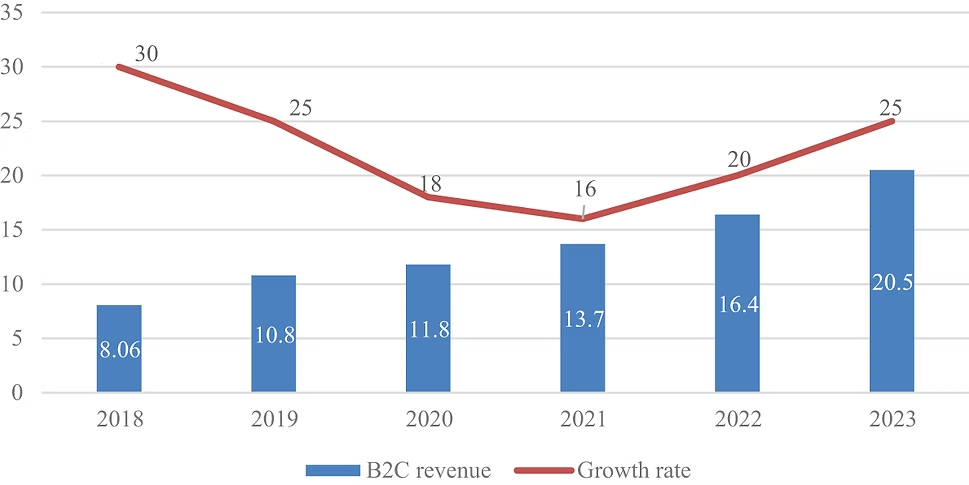
For Seahorse Shipping, a logistics company in Gia Lai, we implemented SFCC integrated with an Order Management System (OMS), helping increase online revenue by 25% within the first quarter. This reflects our “Radiance Wave” philosophy—spreading value from one touchpoint throughout the entire organization.
Vietnam e-commerce growth chart illustrating the case:
Source: eu-opensci.org
Research on Vietnam’s E-commerce in the Process of International Economic Integration | European Journal of Development Studies
5. Frequently Asked Questions (FAQ)
How long does implementation take?
Typically 3–12 months depending on project complexity. Basic implementations usually take 3–6 months.
Is it suitable for Vietnamese SMEs?
Yes, especially with Commerce Foundations, which is available at no additional cost for organizations already using Salesforce CRM.
How does it compare to Shopify or Magento?
SFCC offers stronger AI capabilities, deeper integrations, and greater scalability, making it ideal for enterprises planning significant growth.
Is data secure?
Yes. SFCC complies with ISO 27001, SOC 2, and PCI DSS Level 1 standards.
Can I migrate from an existing platform?
Yes. Nimbus supports smooth migrations while preserving SEO rankings and traffic performance.
Conclusion
Implementing Salesforce Commerce Cloud in Vietnam is a critical step in digital transformation, particularly as e-commerce continues to grow by 11.2% in 2026. Nimbus Consulting, with its Business-First mindset, supports businesses from initial consultation through ongoing optimization, ensuring strong ROI and sustainable growth.
Start Your Digital Transformation Journey with Nimbus Consulting
Do not let implementation costs or project complexity prevent your business from unlocking the full potential of e-commerce growth. Let Nimbus Consulting help you maximize your Salesforce Commerce Cloud investment today.
Contact us for a free consultation and a detailed quotation:
Hotline: (+84) 812 014 918
Address: 68 Bat Nan Street, Binh Trung Ward, Ho Chi Minh City, Vietnam
Website: nimbus-consult.vn